
How Long Does a Roof Last in North Texas?
An asphalt shingle roof in North Texas may serve a home for roughly 15 to 25 years, while a metal roof may last 30 to 50 years or longer. Those are planning ranges, not replacement dates. A roof’s actual service life depends on its materials, installation, ventilation, maintenance, and the storms it has experienced.
That matters in Dallas–Fort Worth, where a roof may face hail, high winds, heavy rain, and long stretches of summer heat. A 12-year-old roof with extensive storm damage may need more attention than a well-kept roof that is 20 years old. At MFB Roofing, we use age as a starting point, then inspect the roof before recommending repair or replacement.
How Long Do Common Roofing Materials Last?
Asphalt shingles and metal roofing have different expected service lives, but the material alone cannot tell you when a roof will need replacing. In North Texas, asphalt shingles may last roughly 15–25 years, while metal roofing often lasts 30–50 years or longer. Think of those ranges as a starting point.
A hailstorm can damage a relatively new roof. An older roof may still be in good condition. Installation, past repairs, flashing, fasteners, and drainage all affect how well a roof performs.
Commercial roofs need a separate assessment. Many use flat or low-slope systems with materials and drainage details unlike those on a typical house. If you manage a business property, our commercial roofing team can examine its system and explain its condition.
Why Can North Texas Weather Shorten a Roof’s Service Life?
Weather does not affect every roof equally. The type and location of damage matter more than the number of storms a roof has seen.
Hail Can Damage Roofing Materials
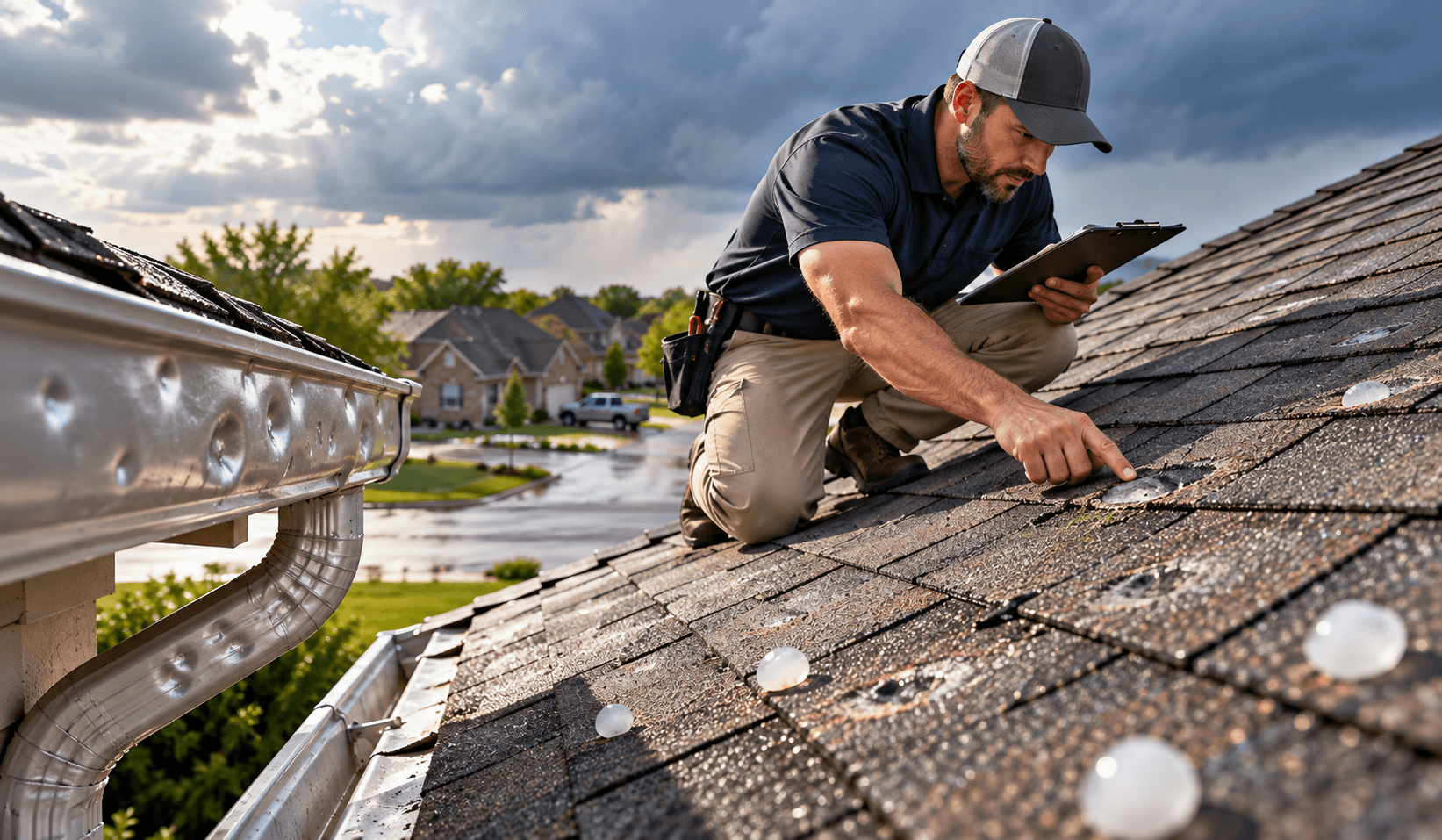
Hail may crack shingles, displace granules, or damage metal roofing components. Granules are the small mineral pieces on an asphalt shingle’s surface. Some granule loss occurs with age, so loose granules in a gutter do not prove that a recent storm damaged the roof.
After a hailstorm, we look for distinct impact damage and assess the roofing around it. A small affected area may be repairable; damage spread across several sections may require a different plan. Our storm damage assessments focus on what happened to your roof, not what happened to a neighbor’s.
Wind And Heavy Rain Can Expose Weak Points
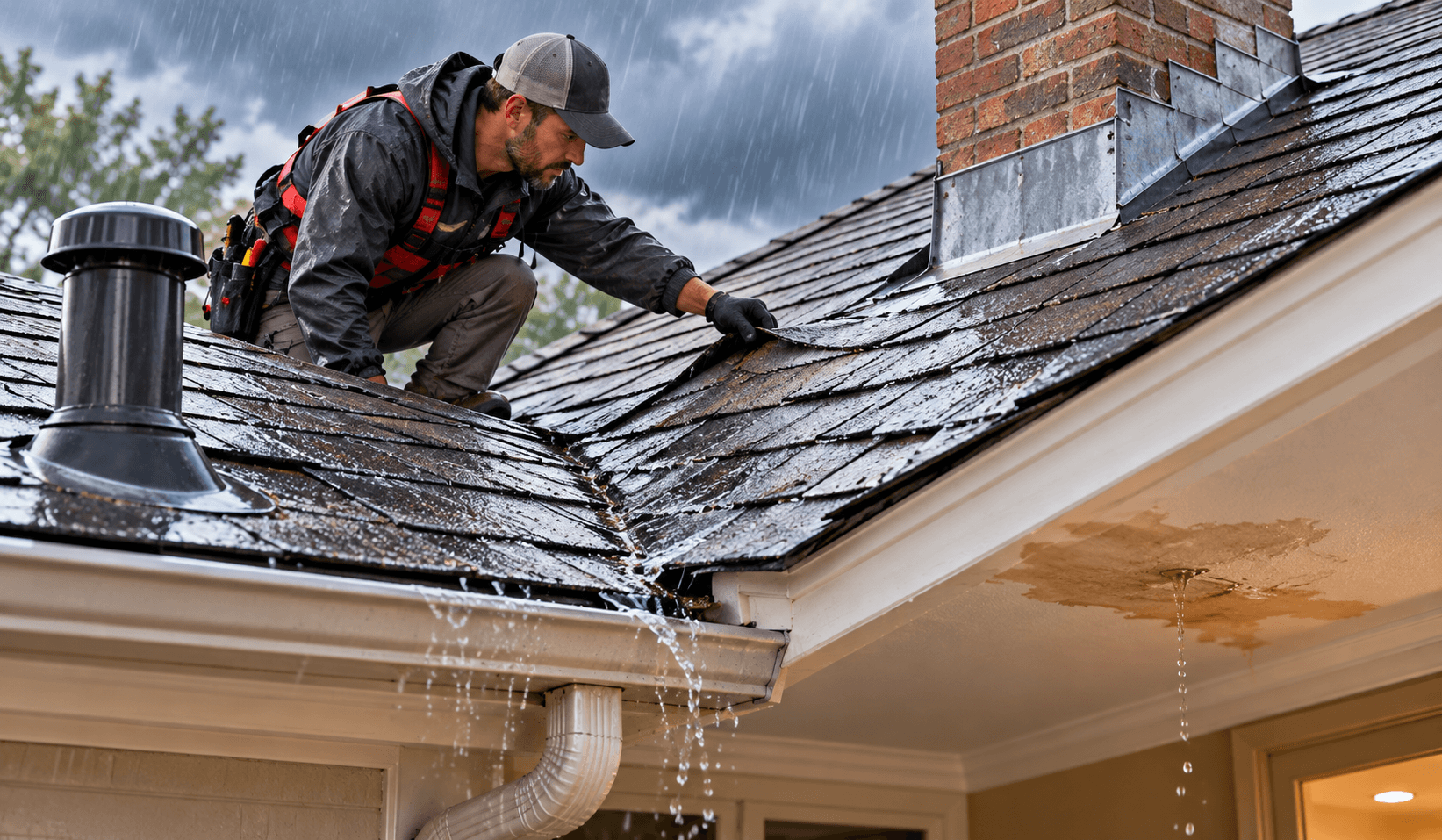
High winds may lift or displace shingles. Heavy rain can reveal a gap around flashing, a vent, or another opening. Flashing is the material that directs water away from places where the roof meets a wall, chimney, or other feature.
A leak after a storm does not establish that the whole roof is worn out. We need to find where water entered and assess the condition of the surrounding materials.
Heat Adds To Everyday Wear
North Texas summer heat exposes roofing materials to high temperatures for extended periods. Changes between hot days, cooler nights, and storms place further demands on roof components and their connections.
Heat alone is not a reason to replace a roof. It does make the roof’s present condition more useful than a simple age calculation.
Does Attic Ventilation Affect Roof Life?
It can. Attic ventilation helps move heat and moisture through the attic space. If airflow is poor or moisture is collecting, the underside of the roof may need attention even when the shingles look acceptable from the street.
Ventilation is only one part of the picture. Insulation, air movement from the home, roof construction, and existing moisture problems can all affect what we find in an attic. If you have noticed damp materials, staining, or persistent attic moisture, an attic inspection can help identify the concern.
A ventilation change should address an observed problem. It is not a guaranteed way to add a set number of years to a roof.
What Are the Signs a Roof Is Nearing the End of Its Life?
Look for changes in the roof’s condition and performance rather than waiting for a particular birthday. Signs worth investigating include:
- Cracked, curling, missing, or repeatedly loosening shingles
- Broad areas where shingles have lost their protective surface
- Leaks in more than one location
- Repairs that fail or are needed in new areas
- Damaged flashing around roof openings
- Soft or water-damaged materials found during an inspection
You may spot missing shingles from the ground or notice stains indoors. Other concerns are difficult to judge without getting onto the roof or examining the attic. Avoid walking on the roof to make your own assessment, particularly after rain or a storm.
A single sign does not automatically mean replacement. For example, one leak near a vent may call for a focused repair. Several leaks across an aging roof raise a different question: whether fixing each one will leave the rest of the roof dependable.
Can Roof Repair Extend the Life of an Older Roof?
Yes, when the damage is localized and the surrounding materials can still support a sound repair. Replacing a damaged shingle or repairing flashing can address a specific problem without replacing an otherwise functional roof.
The challenge with an older roof is that materials may be brittle or worn across a wider area. Work on one section can disturb neighboring shingles, and a successful repair cannot reverse deterioration elsewhere. We explain those limitations before suggesting work.
Previous repairs are useful history. Tell us where the roof has leaked before and what was done, if you know. That helps us distinguish a new, isolated problem from a pattern developing across the roof.
How Can You Help Your Roof Last as Long as Practical?
You cannot control hail or wind, but you can address small issues before they remain exposed through repeated storms.
A sensible approach is to:
- Check the roof visually from the ground after severe weather.
- Keep an eye on gutter overflow and drainage near roof edges.
- Have visible damage or a new leak evaluated.
- Keep records of installation dates and past repairs.
- Arrange periodic inspections based on the roof’s condition and storm history.
For example, a gutter that repeatedly overflows may need clearing or repair. That does not mean the shingles have failed, but water moving behind the gutter deserves attention. We can assess gutters and nearby roof edges when drainage is part of the concern.
Maintenance helps us find problems that can be addressed. It cannot prevent every storm loss or guarantee a roof will reach the upper end of a lifespan range.
When Should You Consider Roof Replacement?
Consider replacement when an inspection shows that repairs will not adequately address the roof’s condition. That may involve widespread storm damage, deteriorated materials across multiple areas, recurring leaks, or problems beneath the roof covering.
We also discuss the practical scope of repairs. A repair may be technically possible but leave you facing the same issue in another area soon afterward. In other cases, a modest repair is the appropriate choice even though the roof is older.
If replacement makes sense, we explain what we found and what the work would involve. The recommendation should be tied to your roof’s condition—not to an age printed on a calendar.
Get a Clear Picture of Your Roof’s Condition
How long a roof lasts in North Texas depends on more than its material or installation year. Storm history, everyday wear, drainage, and the condition of individual components all shape the answer.
If you do not know your roof’s age, have noticed changes, or want to assess it after a DFW storm, contact MFB Roofing to schedule an inspection. We will review its condition with you and explain whether it needs attention now.
FAQs
Is a 20-year-old roof too old?
Not necessarily. Twenty years is a useful point to assess an asphalt shingle roof’s condition, but age alone does not determine whether it needs replacement.
Does a hailstorm shorten a roof’s life?
It can if hail causes functional damage. The effect depends on what was damaged and whether the affected areas can be repaired.
Does a roof warranty tell me how long the roof will last?
No. Warranty terms and actual service life are different. Review the documents for your specific product and have the roof assessed based on its present condition.
Can a roof last longer than its typical range?
Yes, some do. Material quality, installation, exposure, and upkeep vary. A planning range is not an expiration date.
How often should I have my roof inspected in North Texas?
There is no single schedule that fits every property. Arrange an inspection when you notice a leak or visible damage, and consider one after a significant storm or as an older roof changes condition.
Does a 20-year-old roof need replacing?
Not automatically. Its condition matters more than its age. An inspection can show whether repairs are enough or replacement makes sense.
Recent Posts