
How Much Hail Damage Does It Take to Replace a Roof in Texas?
There is no set number of hail hits that means a roof must be replaced in Texas. A few damaged shingles may be repairable. Damage spread across several roof sections may make replacement the better option. The deciding factors are what hail damaged, how far the damage extends, and whether a repair can restore the affected areas.
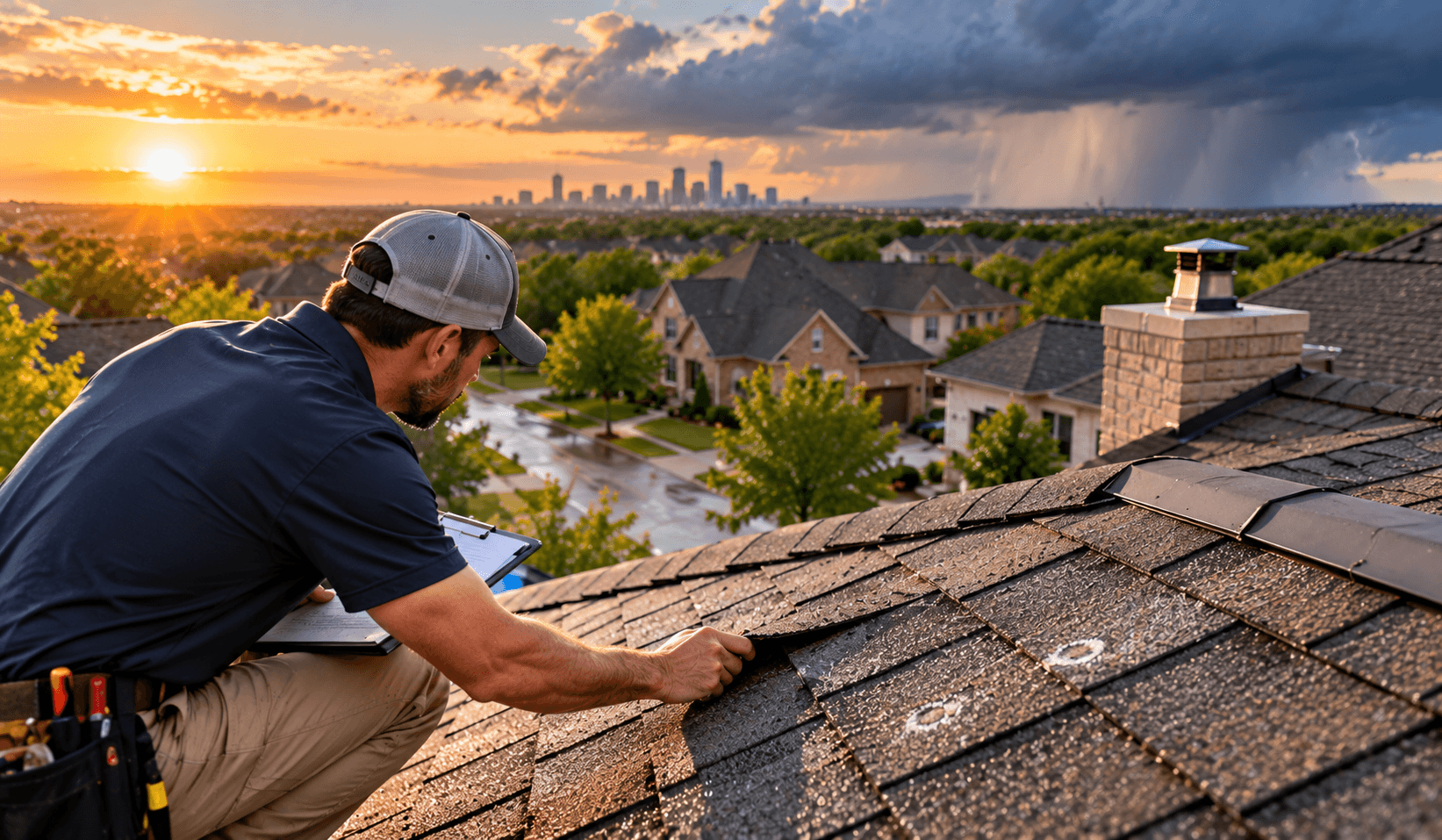
After a Dallas–Fort Worth hailstorm, the roof may look unchanged from the driveway. You might instead notice dents in the gutters or roofing granules near a downspout. Those are reasons to take a closer look, but neither tells the full story. At MFB Roofing, we inspect the roof’s condition before recommending a repair or replacement.
Is There a Minimum Amount of Hail Damage for Roof Replacement?
No. A roof does not qualify for replacement based on a universal hailstone size or a fixed number of impact marks. The same storm can affect neighboring roofs differently.
One home may have sound shingles with damage limited to a small section. Another may have older, brittle materials and damaged shingles on several slopes. Roof shape and exposure also matter: wind-driven hail may strike one side harder than another.
The useful question is whether the damaged areas can be repaired while the rest of the roof continues to perform properly. A professional assessment after storm damage should identify both the impact damage and the condition of the surrounding roof.
What Does Hail Damage Look Like on a Roof?
On asphalt shingles, hail can leave surface marks, displace granules, crack the shingle, or damage the supporting layer beneath its surface. The appearance of a mark alone does not show how much the shingle was affected.
During an inspection, we may look for:
- Cracks, splits, or punctures at impact points
- Broken shingle edges or tabs
- Granule loss concentrated around an impact
- Damage to the shingle’s underlying mat
- Damage to roof vents, flashing, or other components
Granules are the small mineral pieces on an asphalt shingle. They help protect the material underneath. Finding loose granules in a gutter does not, by itself, establish recent hail damage; shingles can also shed them as they age. We look at where the loss occurred and what the material beneath it looks like.
Other roofing materials respond differently. Hail may dent a metal panel without puncturing it, for example. An inspection needs to consider the material on your roof and whether the impact affected its function.
When Can Hail Damage Be Repaired?
A roof repair may be appropriate when damage is limited to a defined area and the roofing around it remains sound. If several shingles are damaged on one slope, replacing those shingles may resolve the problem without replacing the entire roof.
The condition of adjacent shingles matters. To replace one shingle, a roofer may need to lift or handle nearby materials. Shingles weakened by age and years of North Texas heat may crack during that work. We account for that before recommending a small repair.
We also check connected components. Flashing is the material that directs water away from roof openings and joints, such as vents and chimneys. If flashing was damaged, replacing shingles alone may leave a path for water to enter.
A useful repair addresses the damaged materials and the way water moves through that area. If the damage is isolated and the surrounding roof is in good condition, targeted roof repair may be all that is needed.
When Might Hail Damage Call for a New Roof?
Roof replacement becomes more likely when functional damage is widespread or localized repairs cannot provide a sound result. Damage on several slopes is different from a handful of affected shingles in one spot.
We consider the full picture, including:
How Widely The Damage Is Spread
Multiple damaged areas can require extensive work. We assess whether those areas can be repaired individually and whether the remaining roofing is still in suitable condition.
The Roof’s Condition Before The Storm
Hail damage may occur on a roof that already has cracked shingles, previous patches, or recurring leaks. Those conditions do not automatically require replacement, but they affect whether another repair makes sense.
Damage Beneath The Visible Roofing
Water may affect materials below the roof covering. Decking is the structural surface that supports the roofing material. Some decking conditions can be assessed during an inspection; others only become clear once the material above is removed.
If replacement is recommended, we should be able to explain which findings support it. A roof’s age alone is not enough of an explanation. Our residential roof replacement process begins with an inspection so the proposed work reflects the roof’s actual condition.
Do Dented Gutters Mean the Roof Needs Replacement?
No. Dents in gutters, downspouts, or metal vents show that hail struck those surfaces. They do not establish that the shingles need replacement.
Metal often displays impacts more clearly than roofing materials do. A roof may also have damage that is difficult to see from the ground. We examine the shingles or other roof covering directly and check nearby components, including gutters and drainage.
The same caution applies to a neighbor’s roof. Even if a nearby home is getting a new roof after the storm, yours needs its own evaluation.
Can a Roof Have Hail Damage Without an Immediate Leak?
Yes. A damaged shingle may not allow water into the home during the first rainfall. Later wind or heavy rain can expose a weakness that was not obvious right after the hailstorm.
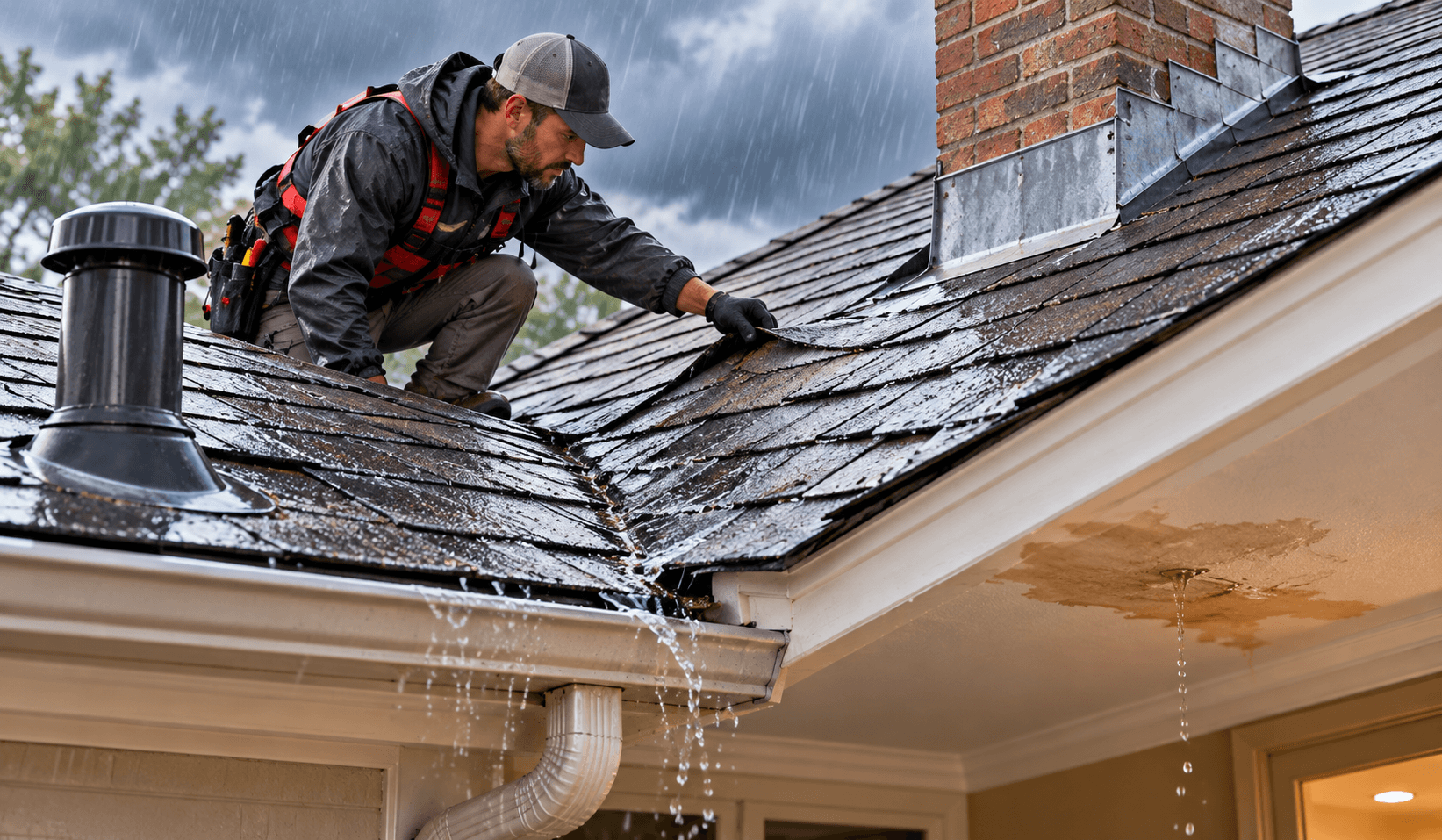
A leak also does not prove hail damaged the shingles. Water might enter around a vent, chimney, wall connection, or another opening. It can travel along the roof structure before appearing as a ceiling stain somewhere else.
That is why we trace a leak instead of treating the stain as its exact starting point. If you notice moisture indoors, photograph it and note when it appeared. An attic inspection may help us understand where water traveled and what materials were affected.
What Should You Do After a Hailstorm in DFW?
First, check what you can see safely from the ground and inside the property. There is no need to walk on the roof yourself.
Look for:
- Roofing pieces in the yard
- Missing or displaced shingles visible from the ground
- Dents on gutters, downspouts, or vents
- New ceiling stains or damp attic materials
- Water entering during a subsequent rainstorm
Take photos and make a note of when you noticed each issue. If water is actively entering, move belongings out of its path and contact us about temporary protection for the damaged area.
North Texas storms can bring hail, high winds, and heavy rainfall together. More than one part of the roof may need attention, and not every problem will have the same cause. A careful inspection helps separate hail impacts from wind damage, existing wear, and unrelated leaks.
What Should a Hail Damage Inspection Tell You?
An inspection should give you a clear account of what is damaged, where it is damaged, and why a particular repair or replacement is recommended.
We look at the roof covering and relevant components, document our findings, and explain the practical options. If the roof has older wear or previous repairs, we discuss how those conditions affect the proposed work. Photos help you see the areas that may not be visible from the ground.
If you are considering an insurance claim, inspection records can help you describe the damage. Your insurer determines coverage under your policy; a roofing contractor cannot promise that a claim will be approved or that a replacement will be covered.
Get an Answer Based on Your Roof
How much hail damage does it take to replace a roof in Texas? It depends on whether the damaged areas can be repaired effectively and how the rest of the roof is holding up. The right answer comes from examining the roofing material, the extent of the damage, and the condition of the surrounding system.
If a hailstorm has left you concerned about your North Texas roof, contact MFB Roofing to schedule an inspection. We will show you what we find and explain the options that fit your property.
FAQs
Can small hail damage a roof?
Yes. Hail size alone does not determine the outcome. The roofing material, its condition, and the force and direction of the impacts also matter.
Does hail damage always require a new roof?
No. Damage limited to a repairable area may call for roof repair. Widespread functional damage may support replacement.
Should I get an inspection if my roof is not leaking?
An inspection can still be useful after a significant hailstorm. The absence of an indoor leak does not establish the condition of shingles or other roof components.
Can hail damage be repaired one shingle at a time?
Sometimes. The damaged shingles and those around them must be in a condition that allows a sound repair. An inspection can determine whether a limited repair is practical.
Will insurance pay for a hail-damaged roof?
Coverage depends on your policy and your insurer’s assessment. We can document our roofing findings, but we cannot guarantee a claim decision.
Recent Posts